
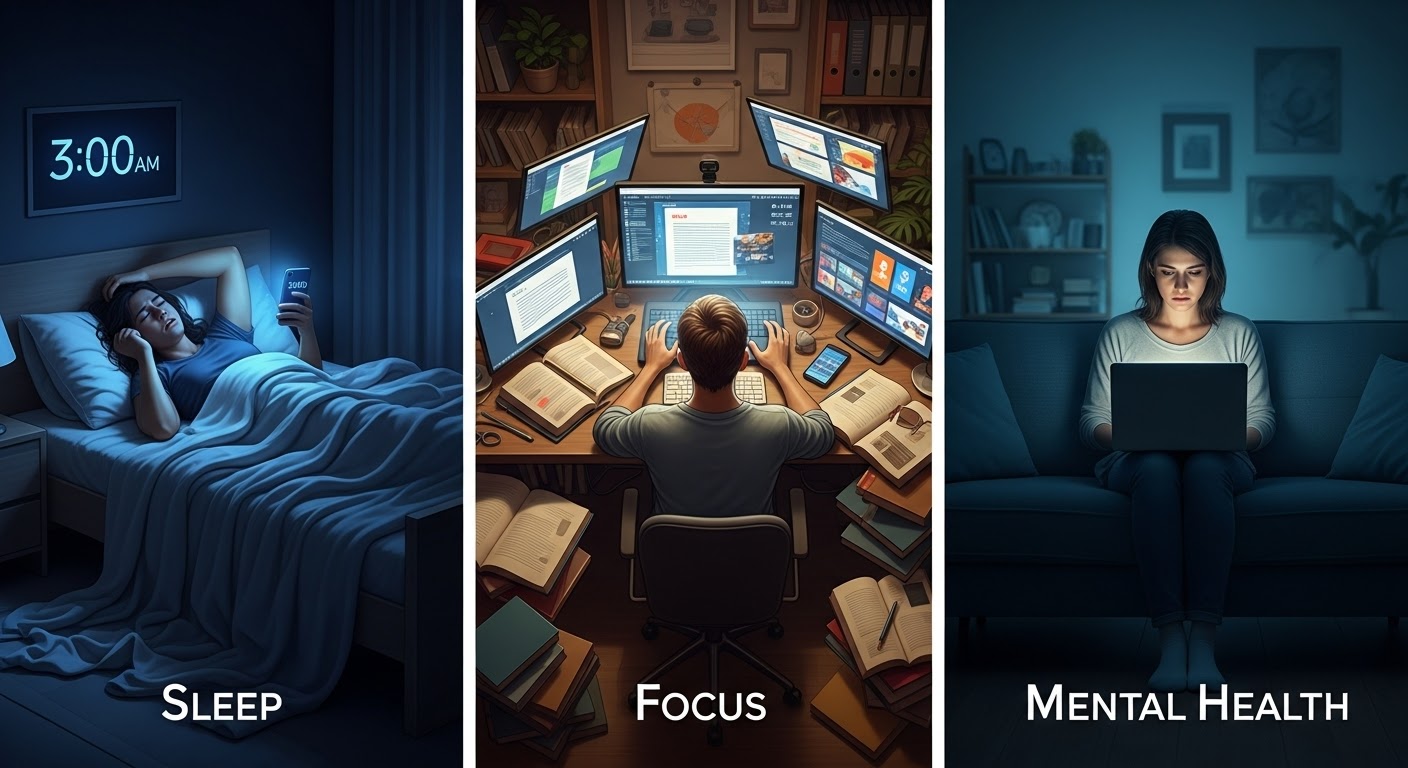
Screens are part of everyday life — phones, laptops, TVs, tablets — and while they’re incredibly useful, too much screen time can quietly affect your body and mind in ways you may not realize. Here’s a clear breakdown of how screens impact your sleep, concentration, and mental well-being, plus simple tips to protect yourself.
1. How Screen Time Impacts Sleep
Blue Light Disrupts Your Body Clock
Digital devices emit blue light, which signals your brain that it’s still daytime. This delays the natural release of melatonin, the hormone responsible for making you feel sleepy.
Poor Sleep Quality
Using screens right before bed can:
- Make it harder to fall asleep
- Reduce deep, restorative sleep
- Shorten your total sleep duration
Stimulated Mind = Restless Night
What you do on your screen matters.
Doom scrolling, tense videos, or late-night gaming can keep the brain in an alert state, making it harder to wind down even after you’ve put the phone away.
2. How Screen Time Affects Your Focus
Shortened Attention Span
Constant notifications, rapid content, and endless multitasking train your brain to crave quick stimulation. Over time, this weakens your ability to stay focused on slow, deep work.
Task Switching = Lost Productivity
Every time you check your phone while working, your brain leaves behind “attention residue.”
This means it takes extra time and mental effort to return to the original task — slowing you down without you even noticing.
Digital Fatigue
Long hours in front of screens can lead to mental exhaustion, eye strain, and reduced cognitive performance, making it even harder to concentrate.
3. Impact on Mental Health
Higher Anxiety and Depression
Heavy social media use — especially mindless scrolling — has been linked with:
- Increased anxiety
- Symptoms of depression
- Higher levels of loneliness
Comparison & Low Self-Esteem
Seeing everyone’s highlight reels can trigger negative self-comparisons, making you feel inadequate even when your life is perfectly normal.
Burnout From Overstimulation
Constant alerts, information overload, and always being “plugged in” can overwhelm your brain, leading to chronic stress and emotional burnout.
Quick Ways to Protect Yourself
- Set a Screen Curfew: Avoid devices 1–2 hours before bedtime.
- Use Blue Light Filters: Turn on night mode or use blue light glasses after sunset.
- Take Screen-Free Breaks: Use the 20-20-20 rule — every 20 minutes, look 20 feet away for 20 seconds.
- Be Intentional: Choose active screen use (learning, creating) over passive scrolling.